ServicesConstruction Debris Removal
Construction Debris Removal in Ocoee
We bring a roll-off to your job site, sized for the debris you're actually making, and haul it away when the work wraps. Before delivery we go over where the dumpster can sit, what can go in it and whether a permit applies, so nothing stalls your project.
Debris removal that keeps your project moving
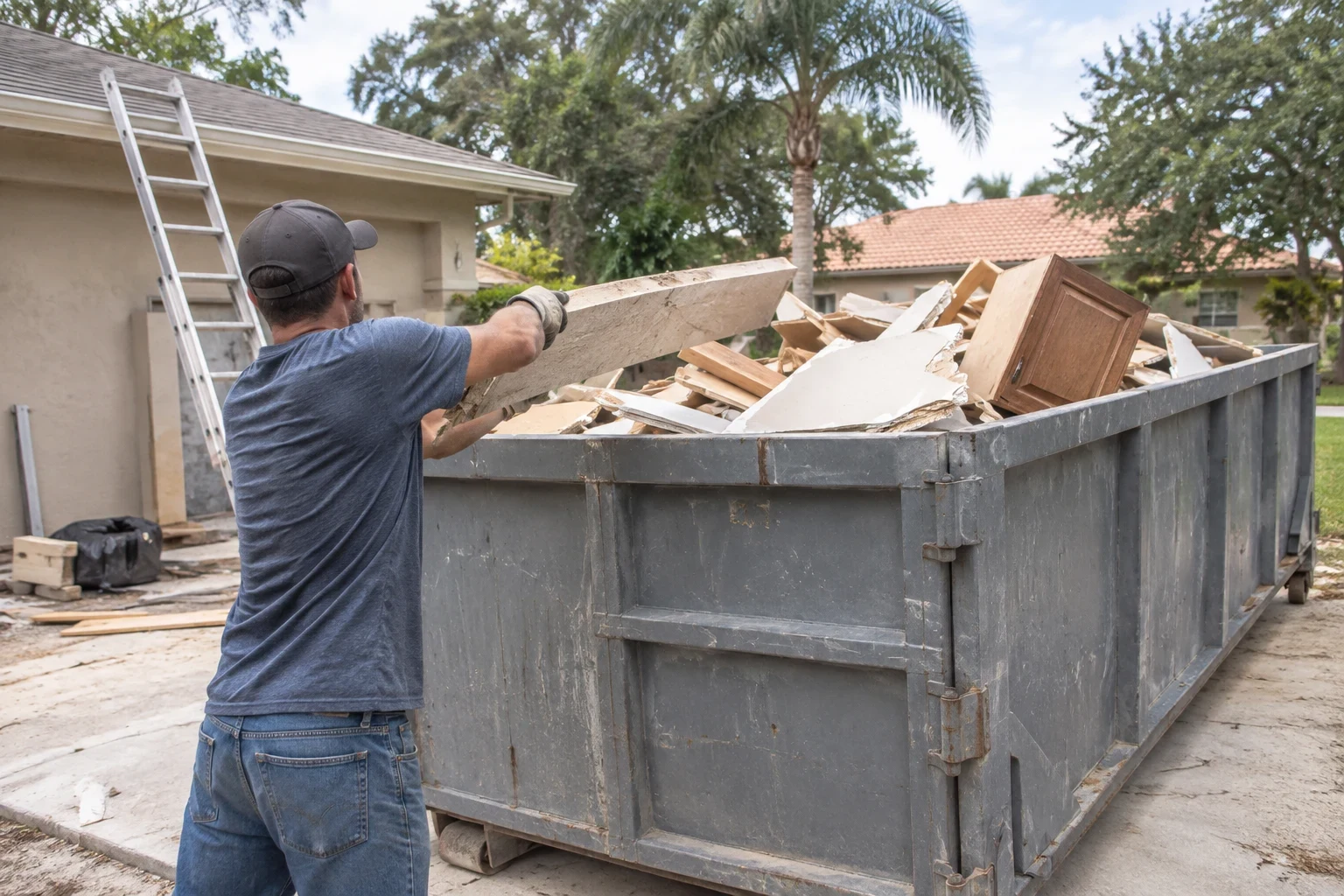
Remodels, roof tear-offs and new builds make more waste than most people expect. Drywall scraps, old shingles, broken tile, lumber with nails still in it. Left in piles, it slows the crew, invites a complaint and becomes a hazard for anyone walking the site.
Our construction debris removal pairs a roll-off dumpster with the planning around it. We help you choose between yard sizes, tell you plainly which materials belong in the container and which need another route, and ask whether the spot you have in mind is on private property or the public right-of-way. That last question decides whether a permit comes into it at all.
If your project is more of a household cleanout than a tear-out, our Roll Off Dumpster Rental page may suit you better. Businesses that need ongoing trash pickup should look at Front Load Dumpster Service.
What our debris removal covers
- Sizing by material, not guesswork
- Concrete, block and roofing shingles hit a weight limit long before they fill the box. We ask what you're tearing out and recommend a size that keeps you inside the weight allowance.
- Placement check before delivery
- A dumpster on your driveway or inside the job site usually doesn't need a permit. If it has to sit on a street or sidewalk, the city may want to approve it first. We explain what that generally involves so you can sort it out before delivery day.
- Clear loading rules
- We tell you up front what can't go in: paint and solvents, batteries, tires, propane tanks and other hazardous items. Knowing this before you load saves you a sorting job at the end.
- Surface protection
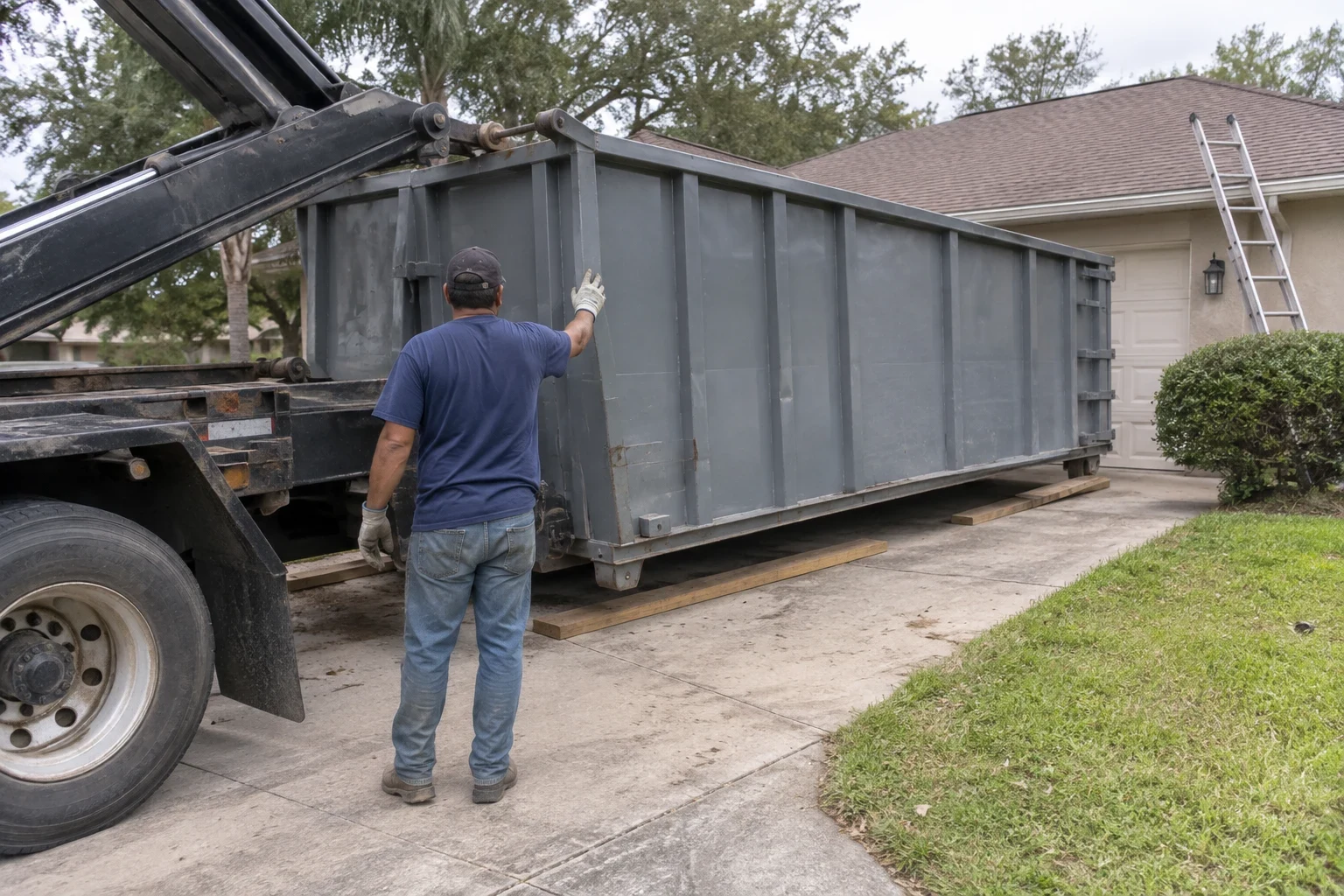
- Where the ground needs it, we set boards under the roll-off's rails to spread the weight across concrete or pavers.
- Swaps and final haul away
- When the container fills mid-project, we can pick it up and drop an empty one so work keeps going. At the end we haul it away and leave the spot clear.
Signs your project needs debris removal
Piles grow faster than you can bag them
Contractor bags tear on tile and nail-studded lumber, and regular curbside trash service won't take construction waste. A dumpster puts it all in one place.
A roof tear-off is on the calendar
Shingles, underlayment and flashing come off fast and they're heavy. Having the container in place before the first section comes off keeps debris out of your landscaping.
Your HOA or neighbors have noticed
Loose debris in a yard or driveway can draw a notice from an HOA or code enforcement. A container with a tidy area around it usually settles the matter.
Rain keeps soaking the pile
Wet drywall and insulation get heavier and messier every day they sit. With central Florida's afternoon storms, a pile left out for a week turns into a much bigger cleanup.
An inspection is coming up
Clearing loose debris before an inspector walks the job keeps the visit focused on the work, not the mess.
How a debris removal job runs
- 1
A phone call to plan it
Tell us what you're tearing out, roughly how much, and where the dumpster would sit. We recommend a size, go over loading rules and let you know if the city may need to sign off on your spot.
- 2
Delivery to your site
Our driver places the roll-off where you agreed, checking overhead wires, tree limbs and room for the truck. Keep cars and equipment clear of that area on delivery morning.
- 3
Loading it the right way
Spread heavy material across the floor and keep debris below the top rim. An overfilled container can't be tarped and hauled safely, so we may ask you to level it before pickup.
- 4
Pickup and disposal
Let us know by phone when you're done or need a swap. We haul the load to an appropriate disposal or recycling facility and leave your driveway clear.
What affects the cost of debris removal
Every job is different, so we price it once we know the details. We quote a flat rate that spells out the rental period and weight allowance, so you know what's covered before the container arrives. These are the things we'll ask about.
- Container size
- Larger yard sizes cost more, but one right-sized container often beats two small ones that each need a trip.
- Material and weight
- Concrete, tile and shingles weigh far more than drywall or framing lumber. Heavy loads may call for a smaller container or a separate load.
- Rental length and swaps
- A long remodel or a multi-day roof job may need extra days or a mid-project swap, which adds to the total.
- Street placement
- A container on a public street may involve a city permit and fee on top of the rental. Driveway placement usually avoids that.
Construction debris removal questions
Something not covered here? (407) 842-8417
Do I need a permit to put a dumpster at my house?
Usually not, if it sits entirely on your driveway or private property. If it has to go on the street, sidewalk or other public right-of-way, the city may require a permit first. HOAs can also set their own rules on how long a container can stay. We go over your spot on the phone so you know which applies before delivery.
Can I mix concrete with regular remodel debris?
You can, but concrete eats into the weight allowance quickly. For a patio or driveway tear-out, a dedicated load of clean concrete is often the better plan. Tell us what you're breaking up and we'll suggest the setup that keeps your cost predictable.
What can't go in a construction dumpster?
Paint, solvents, oils, batteries, tires, propane tanks and other hazardous materials stay out. Appliances with refrigerant need separate handling too. If you're unsure about an item, ask on the call and we'll give you a straight answer.
Will the roll-off damage my driveway?
A loaded container is heavy, so we place boards under the rails where the surface calls for it. Keeping the dumpster off soft ground and away from the edge of the slab also helps. We'll talk through placement before the driver arrives.
What happens if I go over the weight allowance?
Your quote states the allowance and how any overage is handled, so there's nothing hidden. If your debris is heavier than expected, call us before it's full and we can talk about a swap.
Get the debris off your job site
Tell us what you're tearing out and where the dumpster would go. We'll recommend a size, sort out the placement question and set up delivery.